
What Every Girl Needs
A father who teaches her that she can achieve anything

Dear subscribers, I am sorry I have been missing for a few weeks. My father died on February 4 and the impact of his sudden death (although he was 86 and had an underlying illness) has left me shocked and slightly broken in a way that has surprised me.
It’s weird this grief thing. I thought I was generally in tune with my own feelings, but my body and my mind are working in such a strange way. All the old cliches somehow ring true. I do feel like I’ve been hit like a bus. I feel exhausted, constantly on the verge of tears and am struggling to concentrate.
Normal Jew-hate fighting will resume on here (in fact I am working on a story which I will publish), but in the meantime, I want to tell you a bit about my dad who I got my fighting spirit from.
Below is the eulogy I spoke at his funeral a few weeks ago, along with my sisters Alexis and Simone.

Nicole
Dad was loving, infuriating, clever, funny, demanding, outrageous, charming and never ever dull. He wanted to always leave people with a smile and did his best to make the world a little bit better.
Jeffrey Wolfe Simon Lampert was born on June 9 1939, to Letty and Joe Lampert, who had married in 1936 after meeting at a tea dance. A few months later, World War 2 broke out, and Letty was briefly evacuated to Weston Super Mare with dad while Joe, who had a heart problem and stayed in London as an air raid warden. In 1944 his sister Sandra was born.
Letty was a descendant of Jewish aristocracy – her mother Adelaide’s family arrived in England in the late 1600s when Oliver Cromwell allowed the Jews back into England. One relation was Rufus Isaacs, the son of a fruit importer who became the Viceroy of India and the 1st British Jew to become a marquess.
Joe had almost as romantic a background – his grandfather was a French Jewish soldier with Napoleon’s army who had ended up staying in Vilnius. But it became an increasingly tough place to live and his son Abraham, dad’s grandfather, left Lithunia aged just 13 on his own to come to London to make his fortune; he became a master tailor and had six children.
Abraham manufactured uniforms for British forces in WW1 and trained wounded soldiers in tailoring. His son Joe, my grandpa, followed in his footsteps in the tailoring industry – he became a manufacturer of outdoor clothing. But when his company went bust, dad was forced to leave the accountancy firm he was training at and go into business to help support the family.
Dad was an entrepreneur and a natural salesman, always coming up with new schemes.
He always had a twinkle in his eye and an easy confidence. He was 28 when he chatted up a shy, bookish but stunning blonde called Vanessa Pepper at the De Vere nightclub. His chat-up line was, ‘Why were you dancing with that guy when you could see me coming to ask you to dance?’ Mum tried to explain that, as she was extremely short-sighted and didn’t have her glasses on, she hadn’t actually spotted him: he never believed her.
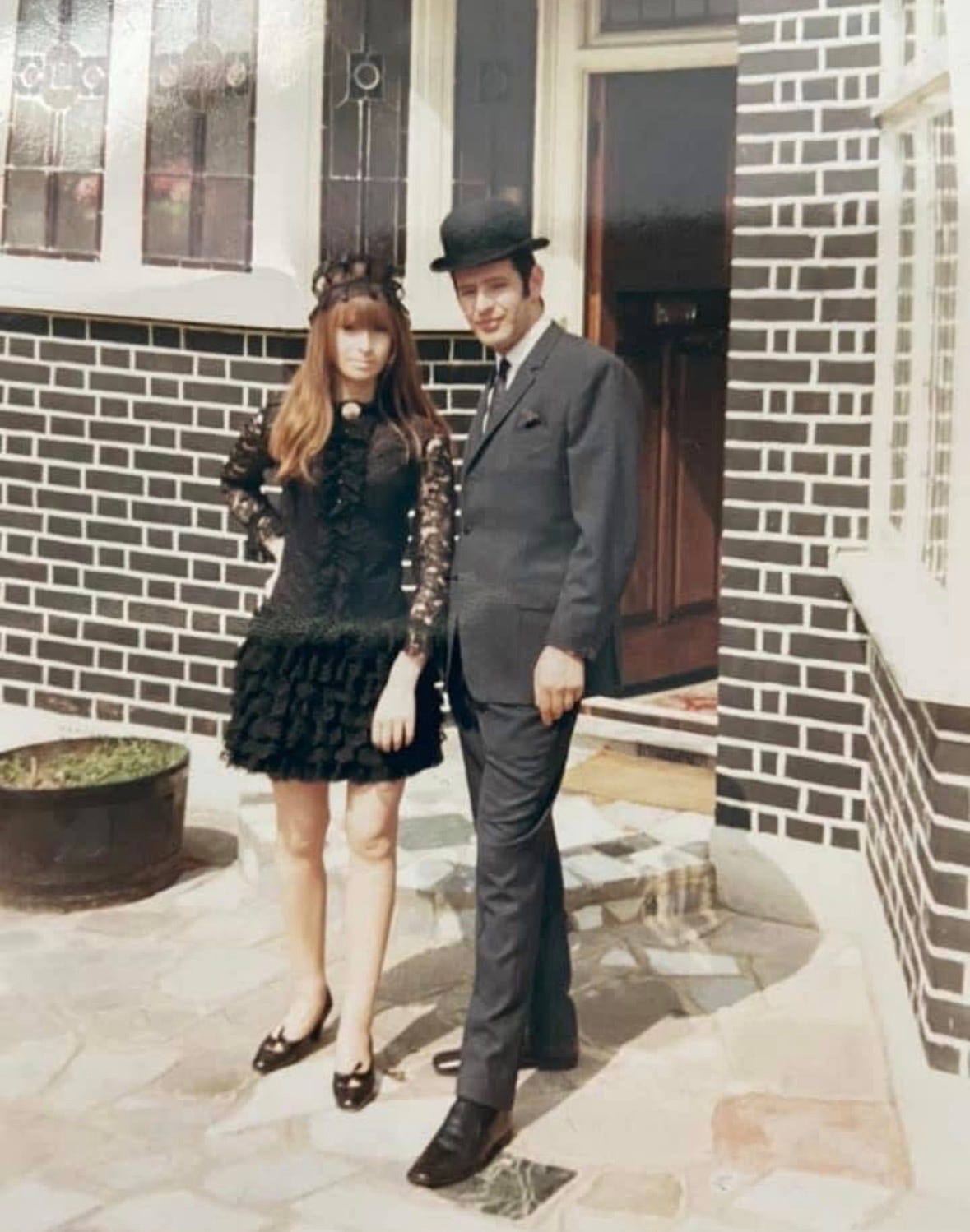
His sister Sandra, who is sadly too unwell to be here, said she was constantly being told by friends that dad was ‘the best looking man in London.’
My parents were an impossibly glamorous pair and they married in 1971. Two years later I came along, followed by Simone and Alexis.
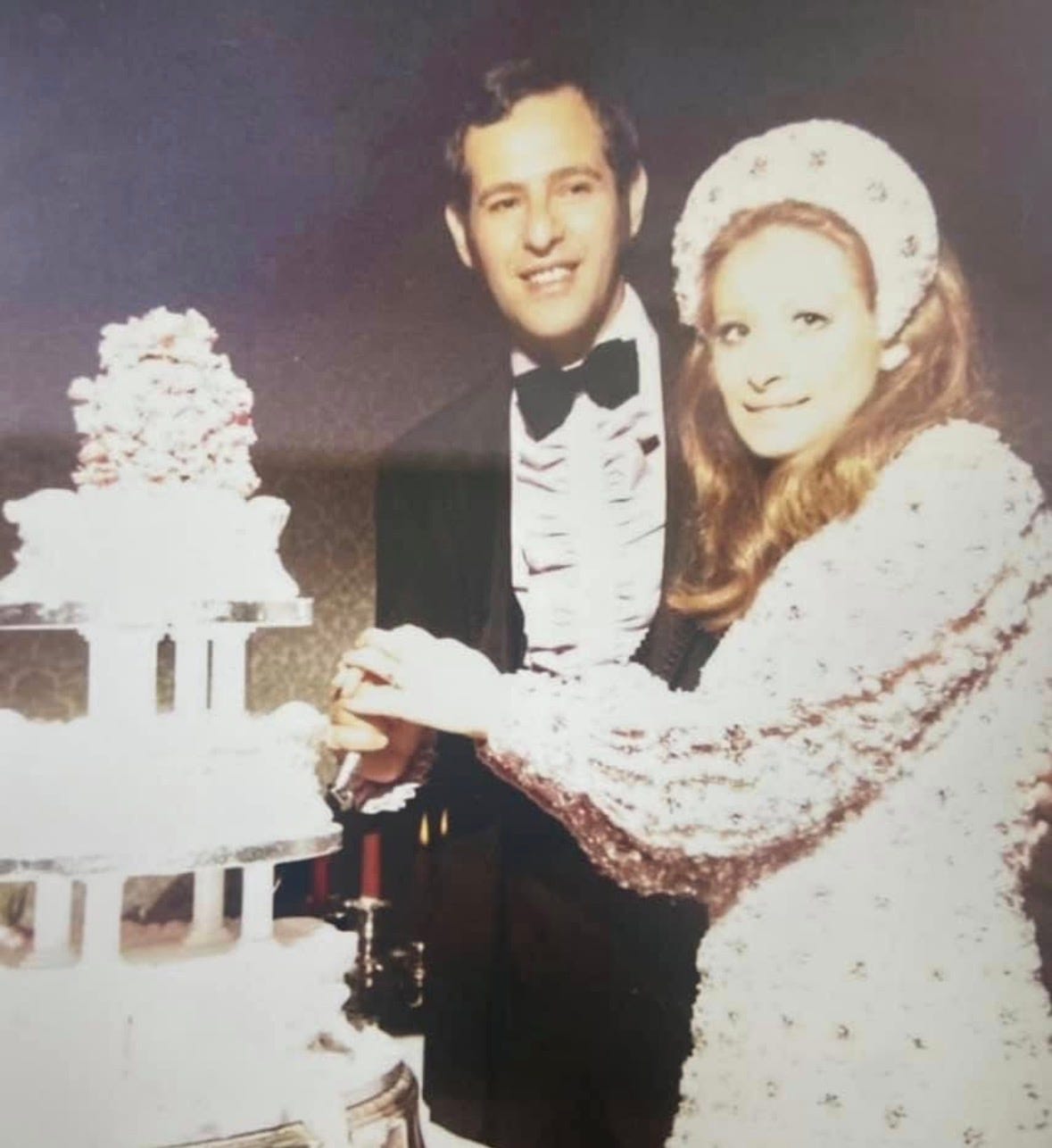
Dad started work as a salesman but was never great at working for other people and so started his own housewares company Heritage in the mid 80s and it became publicly traded in 1988. It employed more than 100 people and like his grandfather, dad made an effort to hire people with disabilities. At its height, it was operating a turnover of more than £12 million, and newspaper articles painted my dad as a small business Thatcherite success story.
He gave his family a wonderful life, a beautiful home and fabulous holidays. He was a workaholic but relished time with us and encouraged us in our pursuits.
Heritage was not to last: after a fire in a warehouse led to stock problems, instead of supporting my dad, the accountancy firm Grant Thornton which had a conflict of interest in working both for him and for the bank, said the company should be put into receivership. A personal guarantee with Lloyds Bank meant that my family lost our home and more. The bank grabbed everything it could.
And so started the second phase of my dad’s life. At first, he and my mum started up a collection of new age shops but the rapacious banks were still determined to hound them. Instead, my dad turned his considerable attention onto the banking system and those who had similarly had their lives ruined by a system in which it benefited banks to close down businesses and take people’s homes.
He befriended MPs and peers across the political spectrum who have been among the many who have written to our family this week to tell us how much our dad meant to them. Lord Prem Sikka described him to us as ‘a wonderful compassionate human being, a fighter who sought to right all the injustices and wanted everyone to live a fulfilling life. Despite all the odds, he never gave up and empowered so many.’
He founded an organisation that helped litigants in person – people who could not afford lawyers but wanted to fight for their rights in the courts. He became a spokesman for the tens of thousands of others who had been similarly caught in the net of the banking system, and just a day before he died, he had his latest chat to a journalist whose book about their perfidy is out later this year; he believes its a big a scandal as the Post Office.
It is only since he died that we’ve really learned how much dad’s work meant to so many people.
The corruption in our world infuriated dad and he fought it as hard as he could. He wanted to make life easier for me and my sisters and was frustrated when he couldn’t do more.

Dad was a loving husband to my mother, Vanessa, and encouraged her as she too started a second phase, as an entrepreneur and businesswoman with her market research company and as an author of six books.
Although they fought like cat and dog, he would end every row by making her laugh. He loved to tease her and make her giggle uncontrollably. He was determined to make her laugh every day. They went on many beautiful holidays and ate in the most fashionable restaurants. Dad always loved his cars and when it was time for me, his eldest to drive, he bought me a Morris Minor convertible which was as old as me but strikingly beautiful.
My parents were married for 55 years and dad was there to nurse mum through her illnesses. He was her Prince Charming and told her he loved her all the time. She adored him. When he collapsed he told her he knew it was the end. He asked her to hold his hand. She told him not to leave her. But it was his time.
Dad always taught his girls there was nothing we couldn’t do. My father he was my biggest cheerleader. He’d count how many articles I’d had published every week, and when I started appearing on television, he would write, ‘You were brilliant!’ ‘So good!’ ‘So articulate!’
Dad was always fun to be around. He loved to talk to people and was interested in everyone and wanted to make them laugh.
He encouraged each of us to reach for the stars and that stubbornness can be a virtue. He taught us that we have to fight for the right thing even if the odds are stacked against us. He was sometimes worried about me as I started speaking about antisemitism but always told me how proud he was.
Sometimes he took stubbornness to the limit – he refused to take medication that could have helped him – he was insistent that the power of the mind could overcome any difficulties. Sometimes it can’t.
Dad was also a loving grandfather who was always encouraging his seven grandchildren – Izzy, Ben, Charlie, Joe, Olly, Joshua and Natalia, teasing them and tickling them and challenging them. From about the age of nine he started schooling my boys in the way of business.
Towards the end, he could barely walk, and was sleeping a lot, but his eyes still retained their mischievous twinkle as we sparred about politics and the latest controversy. His body was failing him and he was feeling despondent about the state of the world but his mind still sparkled.
His life force was so huge that it is hard to think he has gone. But his memory is both a blessing and an inspiration.
ALEXIS
It is never easy to say goodbye to a man who had so much to say. Over the last few years, as Dad’s world perhaps became a little smaller physically, his mind remained as vast and well-traveled as it had always been.
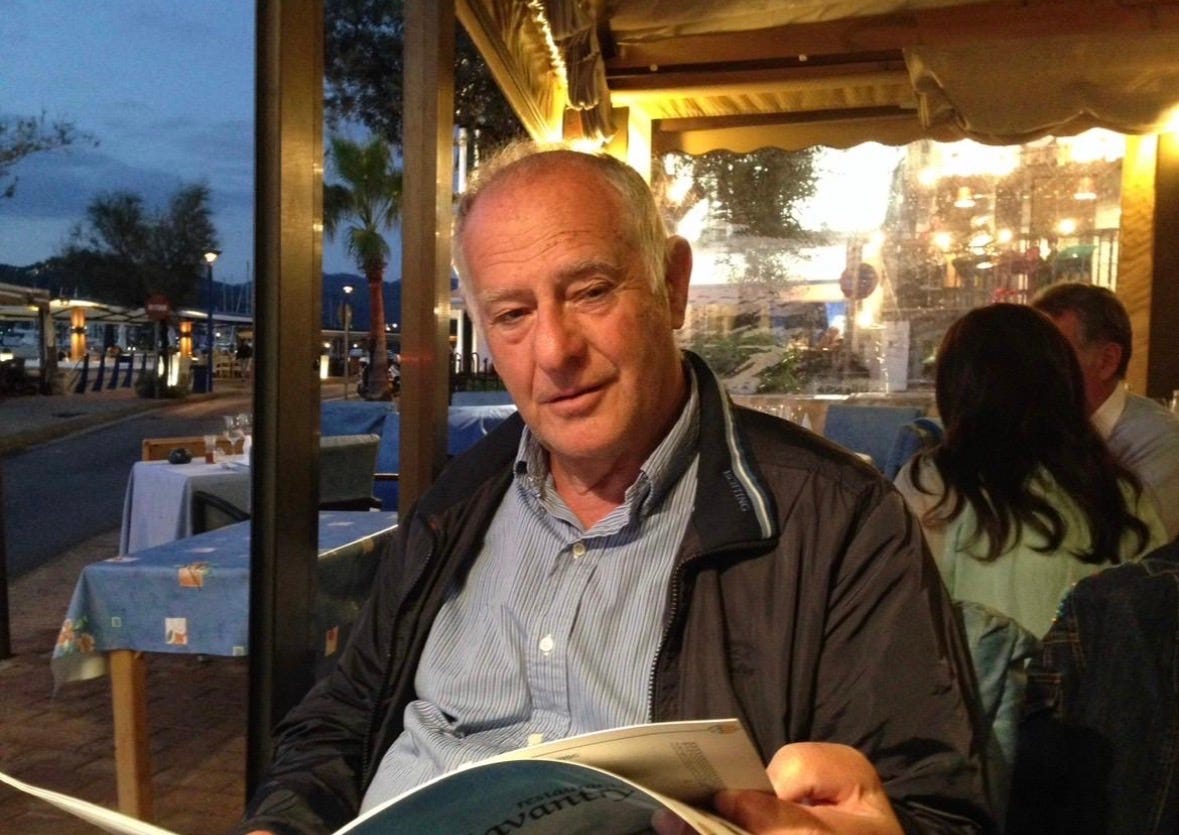
If you spent any time with Dad recently, you knew that a “quick chat” didn’t really exist. We spoke regularly—daily, usually—about nearly everything under the sun.
He wasn’t one for small talk; he wanted to dive straight into the deep end of world affairs, politics, and economics.
Whether you agreed with him or not was almost secondary to the spirit of the debate. He had an opinion on everything.
Every single one of those phone calls or visits started exactly the same way: “So, what’s new?” It didn’t matter if we had just spoken a few hours earlier. To Dad, the world was always moving, and he didn’t want to miss a beat. That simple question wasn’t just a greeting; it was a testament to his curiosity. He genuinely wanted to know what was happening in my world, even if “nothing” had changed since breakfast.
In his later years, Dad loved to look back and recount the stories of his youth. We heard about the early days and the eclectic string of jobs he held—including selling hair cream.
He was a natural-born salesman. That gift of gab and that charm took him across borders and he would reminisce with such clarity about his travels through Portugal, the grey streets of West Berlin, and Yugoslavia.
But as much as he loved the travel, he spoke with just as much fire about his adventures closer to home—the nights spent with his friends Jonny, Peter, Tony, Henry and David and their legendary escapades in the West End. To hear him tell it, those nights were just as exotic and full of life as any trip abroad.
I’ll miss those everyday conversations. I’ll miss the way he challenged my perspective, the way he recounted his “salesman” victories, and even the predictable rhythm of his “What’s new?”
He was a man of stories, a man of strong views, and a man who traveled the globe only to find that home, with his family, is where he felt happiest.
Dad, the world feels a little quieter today without your voice in it. But every time I read a headline or see change in our current world, I’ll hear you asking, “So, what’s new?”
SIMONE
Dad’s enthusiasm for life was infectious. He often reminded me that I was half him whether I liked it or not.
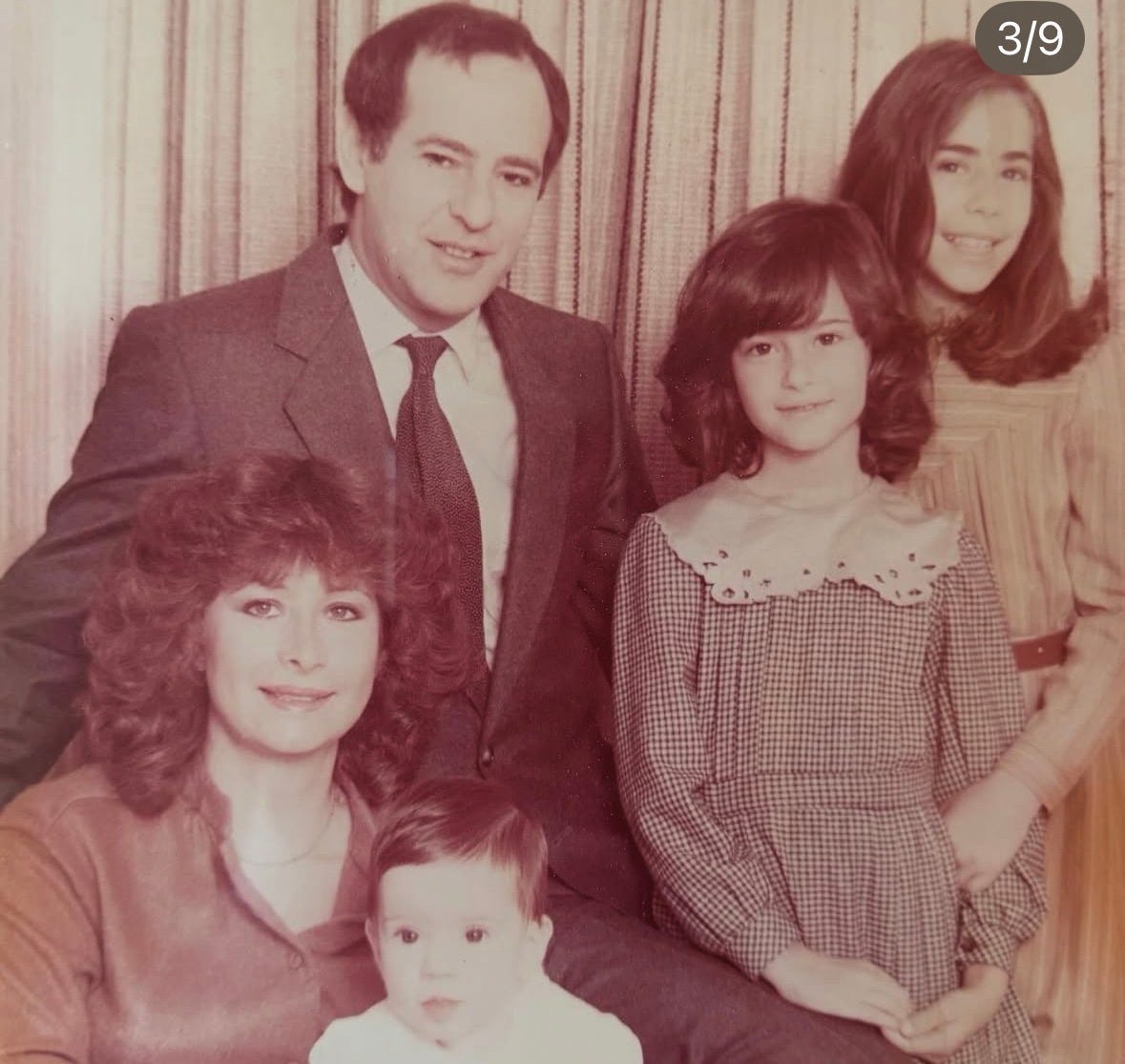
Life in the Lampert household was seldom dull. Dad taught us from an early age to have an opinion and fight for what we believed in.
He encouraged us to work hard and play hard . We barely saw him in London, he worked long hours and weekends. Holidays were sacrosanct and that was when we got to see dad; we had him all to ourselves and he was brilliant. Fan of sunshine, good food, good wine, the high life; we share amazing family memories on holidays, having fun. He was relaxed and fully engaged. And always running late. A Lampert trait we all enjoy, much to the frustration of people around us.
Dad was a man who was used to getting his own way. He liked to be in control. He felt responsible for everything and sadly this included mum’s illnesses including cancer and heart valve replacement surgery.
He also felt responsible for the 100,000 people who have lost their homes through the corruption he saw in the banking systems, he took responsibility for it all as being a direct result of Heritage Vs Lloyds Bank: it plagued him and became his obsession.
He showed us resilience and tenacity. When I collected my A Level results, I didn’t quite make my UCAS offer for IMABS at Manchester University. He knew I had one opportunity to sell myself onto this course. So drove us up from Hampstead to Manchester University to (literally) bang on their door. They refused to let us in. So through the buzzer I had to explain why I was there; they said please leave and send a letter.
So we went to the Manchester Picadilly Hotel, sent a fax on headed paper (I’ve driven up from London, this is how much I want to be on this course) then the following week I called them every day. And a week later, I got the place. That experience showed me if you want something, believe in yourself. Go for it. You can achieve anything you set your mind to.
Like all Lamperts, Jeff was not backwards about coming forwards. We grew up without tact and nuance; if you had something to say, spit it out. My father did not agree with some of my life choices which sometimes made things complicated. But I always knew I was loved.
I realise now that was just him; blunt as a hammer. Spoke his truth and would then happily argue his point. But I knew he always loved me and that when required, he would be the man for life advice. Happy to give a strong opinion about anything.
He thought he knew best. He was fully diagnosed with NPH by every doctor he saw; exhibiting ALL of the symptoms. And still, he knew better. He was FINE and would get better and beat me on the padel court. He hated doctors, hospitals, taking medications and advice. He knew best.
So we all agreed to leave it. He could choose how he wanted to live. Having lived a life of adventure and travel, over the years his world became more and more localised. He left the house less, was spending more time in bed so gradually we barely noticed. And every time we spoke he would say how he was feeling better. The eternal optimist.

Last week he called me twice within the hour to sing me Happy Birthday. We laughed that I’d already suffered his singing once. He forgot he had called. I’m so glad that was our last conversation. Dad’s terrible singing voice and a laugh.
Having received so many messages about him; the twinkle in dad’s eye is a recurring theme. Charismatic. Outspoken. Interesting and interested. Could literally talk to anyone. Charming. Borderline inappropriate, no topic off limits.
I wish all the grandchildren could have known Jeff in his younger years. He was the life of the party and lots of fun. Such an adventurous spirit. Loved to travel and experience new things; we traveled extensively throughout Europe, The Far East and South Africa. He loved listening to music loudly in his car, sunglasses on, windows down.
And mum, we will look after you. Yours and dad’s relationship may have been unconventional but it really worked. After 55 years of marriage you still had lunch and dinner together every day. Complained about each other incessantly and yet could not be apart. You laughed together all the time and your bond was unbreakable.
In the end, his passing was quick and just as though he planned it. At home. No doctors. Holding his wife’s hand. Knowing it was the end.
As I sat there holding his hand I regretted not telling him I loved him enough. But he was finally at peace. From fighting the bank and all the stress that caused. From the state of the world; Iran, AI, Epstein, Starmer, the BBC, rising anti-semitism being fought brilliantly by Nicole.
And in the few days since his passing, my perspective of him has expanded exponentially. To us he was a dad obsessed with fighting the bank. To others he was a hero. We’ve heard him described as a hero of humanity by helping so many people.
We all hope that one day the fight will have been worth it. His legacy lives on in all of us.
Jeff loved to send emails and Whatsapp of his thoughts to an eclectic mix of people. Our Lampert Family Chat was always lively and encouraging. Some of dad’s last Whatsapp Messages include absolute gems like this:
“To make us all better can we all be positive about EVERYTHING. Please. As a family each of us have everything we could want. Please recognise this and be grateful?
Good night!”
Good night Dad, I love you.
Wishing all the family long life. Your memories are a wonderful tribute and the description of your parents relationship reminds me so much of my late parents.
How precious are our wonderful Dads growing up, and precious our memories when they are no longer there. I miss my lovely Dad every day.
May your father's memory be a blessing, Nicole.